
Structural health monitoring for bridges and viaducts
A bridge monitoring system combines dynamic measurements, such as deck and pier vibration, with slow ones, such as bearing displacement, strain, tilt and settlement.
Request a quote
Two kinds of measurement
Bridges carry traffic, temperature and wind loads every day and seismic loads occasionally. Their behaviour shows in two kinds of measurement: dynamic, meaning how the deck, piers and towers vibrate, and slow, meaning how bearings, expansion joints and piers move and how strain develops over months and years. A monitoring system records both on a common time base.
Contact and remote instruments
Contact sensors measure at the point where they are installed. Where access is difficult, MAS deformation monitoring radar and MAS camera-based displacement systems measure from a distance; the camera systems track targets fixed to the structure. The right combination depends on span, access and the quantities the engineer needs.
References
A current StructHEALTH reference in bridges is the structural health monitoring of the Sazlıdere Cable-Stayed Bridge construction, carried out for Rönesans Holding. The project is ongoing.
What is measured
Products that can be used in this solution
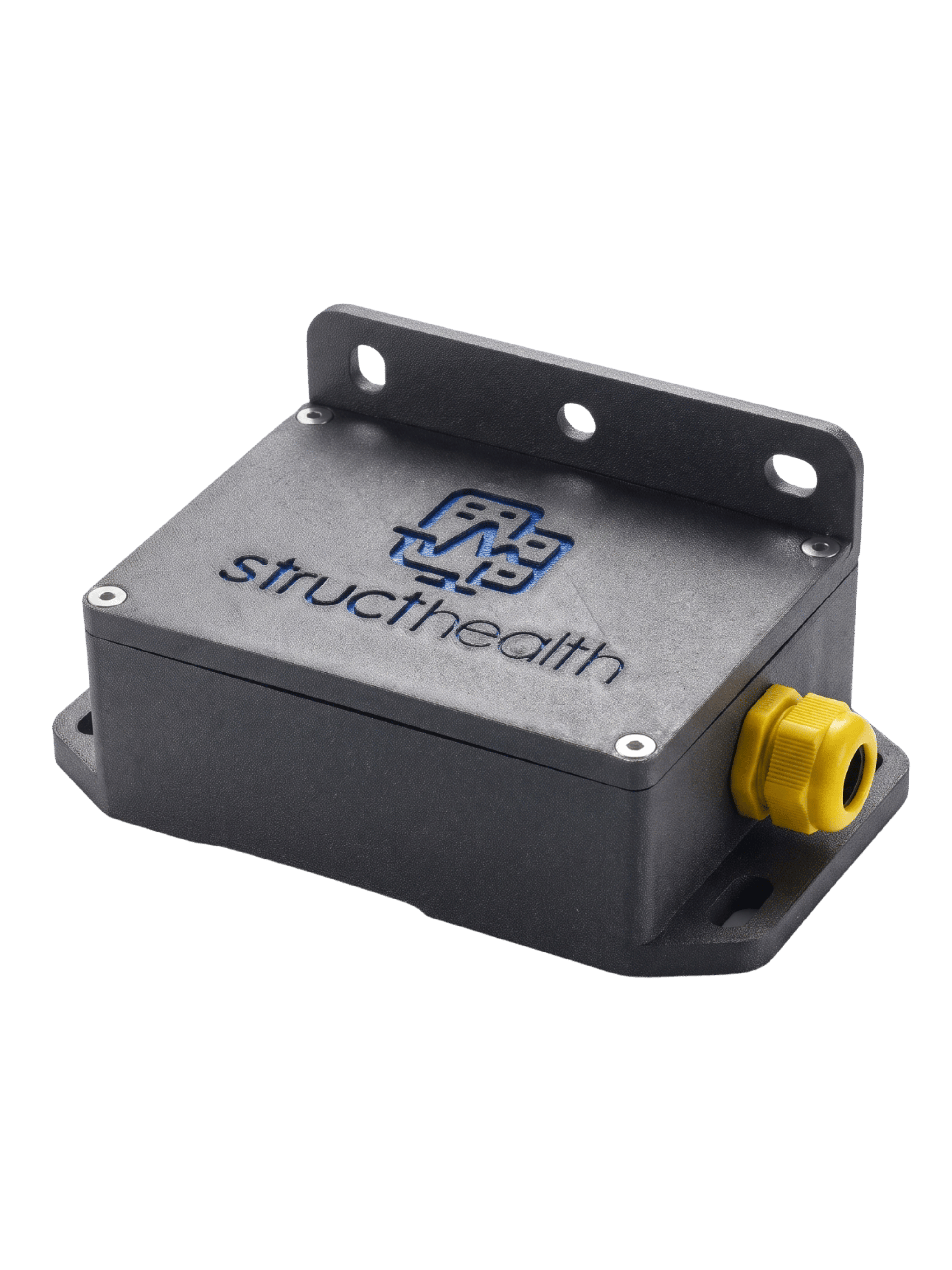
StructSense
Four three-axis nodes, 25 to 0.02 µg/√Hz noise density

IsoMotion
Two-axis displacement of seismic isolators, ±900 mm

Displacement and deformation sensors
Displacement, crack, tilt, settlement and water level

Stress and strain sensors
Strain gauges, load cells and pressure cells

Deformation monitoring radar
Displacement measured from a distance

Camera-based displacement monitoring
MAS-SJWY dynamic and static systems
Monitoring data supports the structural engineer's assessment. Decisions about the condition of a structure remain with the engineer.