
Structural health monitoring for seismically isolated hospitals
Monitoring shows how the isolation system and the building above it actually responded to an earthquake: isolator displacement, floor accelerations and changes in dynamic properties.
Request a quote
Why monitor an isolated hospital
A seismically isolated hospital is designed to remain operational after a strong earthquake. The isolation system achieves this by moving: the isolators displace while accelerations in the superstructure stay low. Monitoring records both, so the engineer can check after an event whether the isolators stayed within their design displacement and whether any residual displacement remains.
Tender requirements in Türkiye
Since 2013, a Ministry of Health circular has required seismic isolation for new hospitals with 100 or more beds in the highest seismic hazard zones. In Ministry of Health tenders for seismically isolated hospital buildings, the technical specification also requires a structural health monitoring system, an earthquake early warning system and a monitoring service. Sensor types, quantities and reporting formats are defined in each tender's specification; StructHEALTH prepares a project-specific proposal against it.
What is measured
Measuring isolator displacement
IsoMotion combines a telescopic rod with a high-resolution inclinometer and converts the measured angle to displacement in two directions. There is no sliding contact to wear, as there is in linear potentiometers, which matters for a device that must work on the day of an earthquake after years of standing still.
References
StructHEALTH references in healthcare include Konya Akşehir State Hospital annex building, Bingöl 500-bed State Hospital, Silvan Hospital, Muğla Hospital and Yatağan Hospital.
Products that can be used in this solution

IsoMotion
Two-axis displacement of seismic isolators, ±900 mm
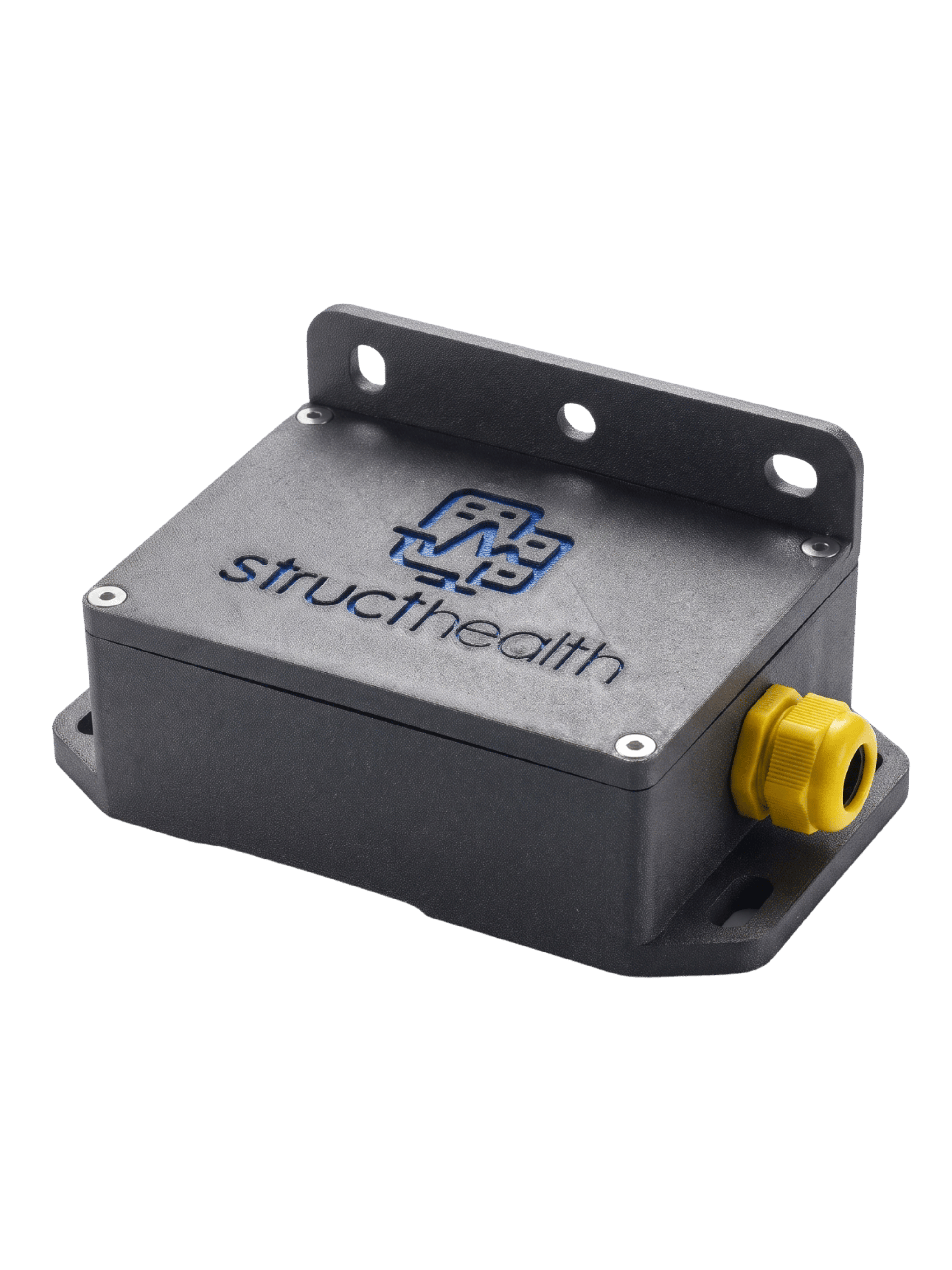
StructSense
Four three-axis nodes, 25 to 0.02 µg/√Hz noise density
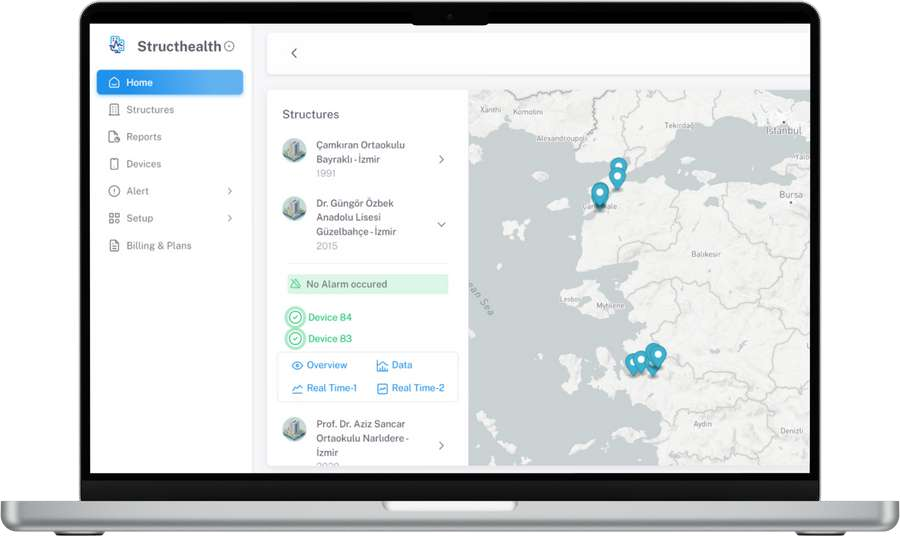
Healthy Structures IoT Platform
Analyses, alarms, reports and modal analysis

Static Digital Twin
Automatic elastic analysis with measured earthquake data
Monitoring data supports the structural engineer's assessment. Decisions about the condition of a structure remain with the engineer.